research focus
Central to my research are questions of publicness, memory, pedagogy, labour, and the politics of the everyday, particularly in understanding the tensions between official cultural narratives and the fragmented or ephemeral traces that emerge through artistic practice and lived experience. As a result, I work across curating, archival research, oral history, spatial mapping, and exhibition-making- and in so doing write and teach about these interconnected practices. I approach the exhibition as both a research methodology and pedagogical site where documents, images, and artistic gestures are brought together to foreground gaps, erasure, and constructed truths.
I am particularly interested in how archives operate not as static repositories, but as contested spaces continually activated through memory, storytelling, performance, and curatorial intervention. Oral history remains an important part of my work, particularly in speaking with artists, educators, and cultural practitioners from the early years of Singapore’s nationhood whose experiences and perspectives may not always exist within formal/state archives.
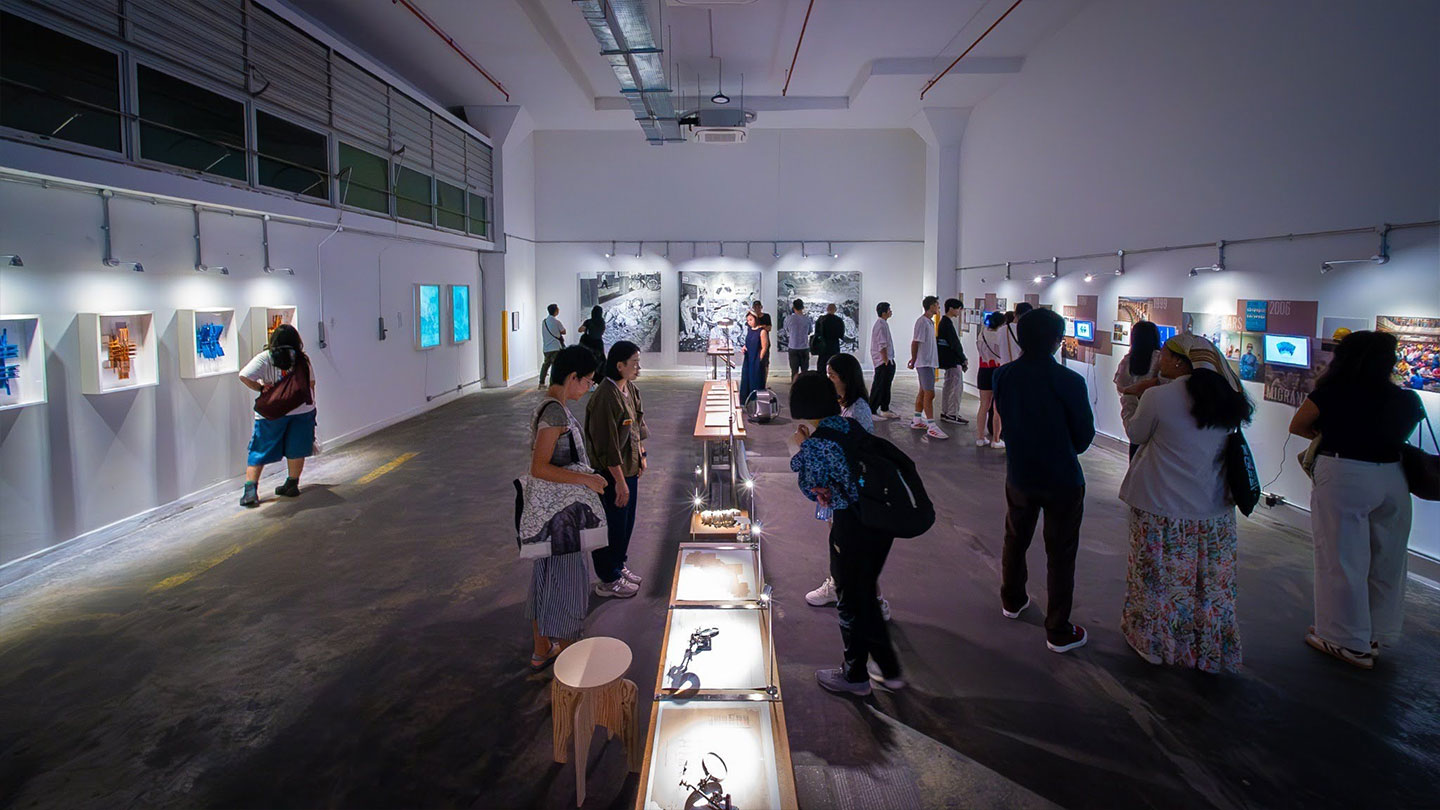
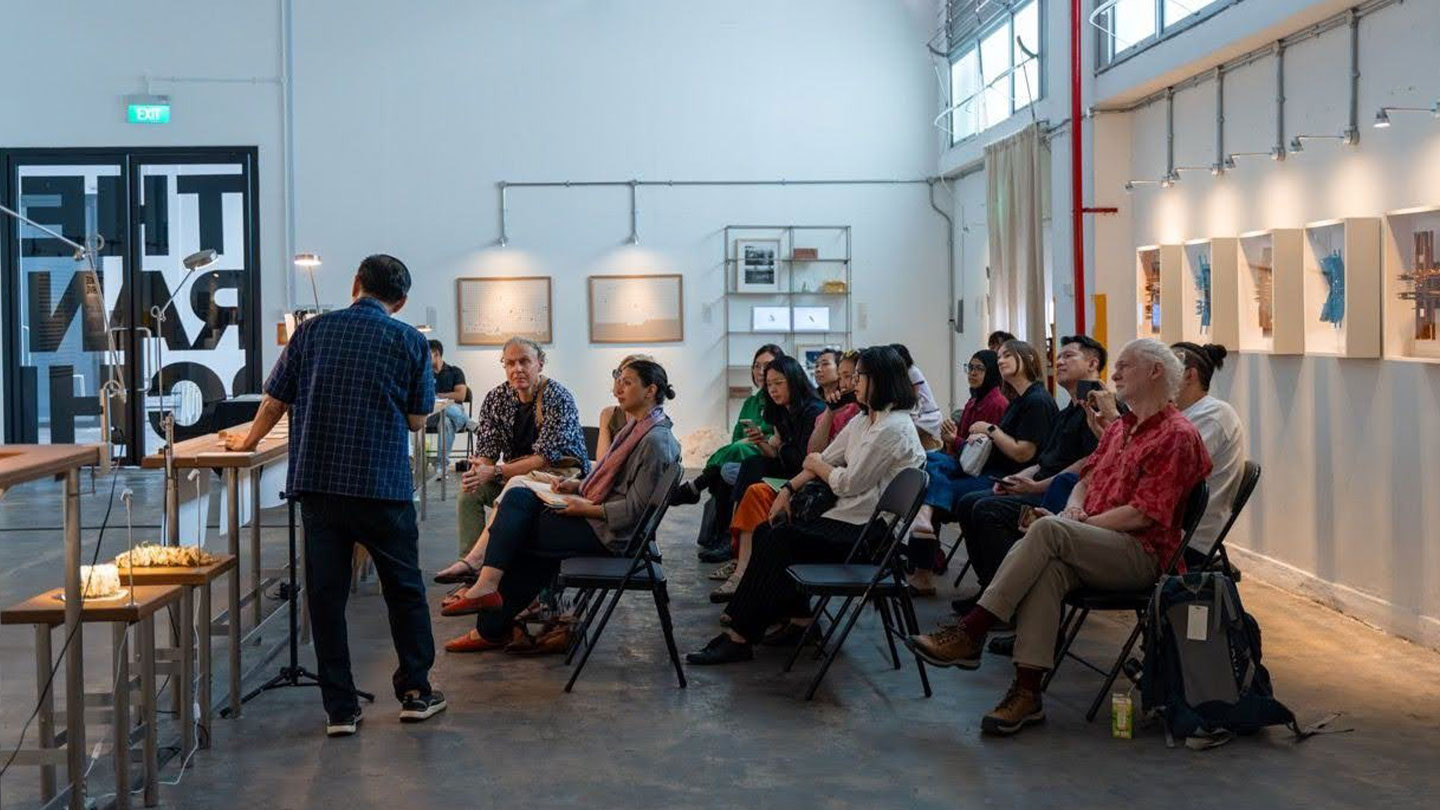
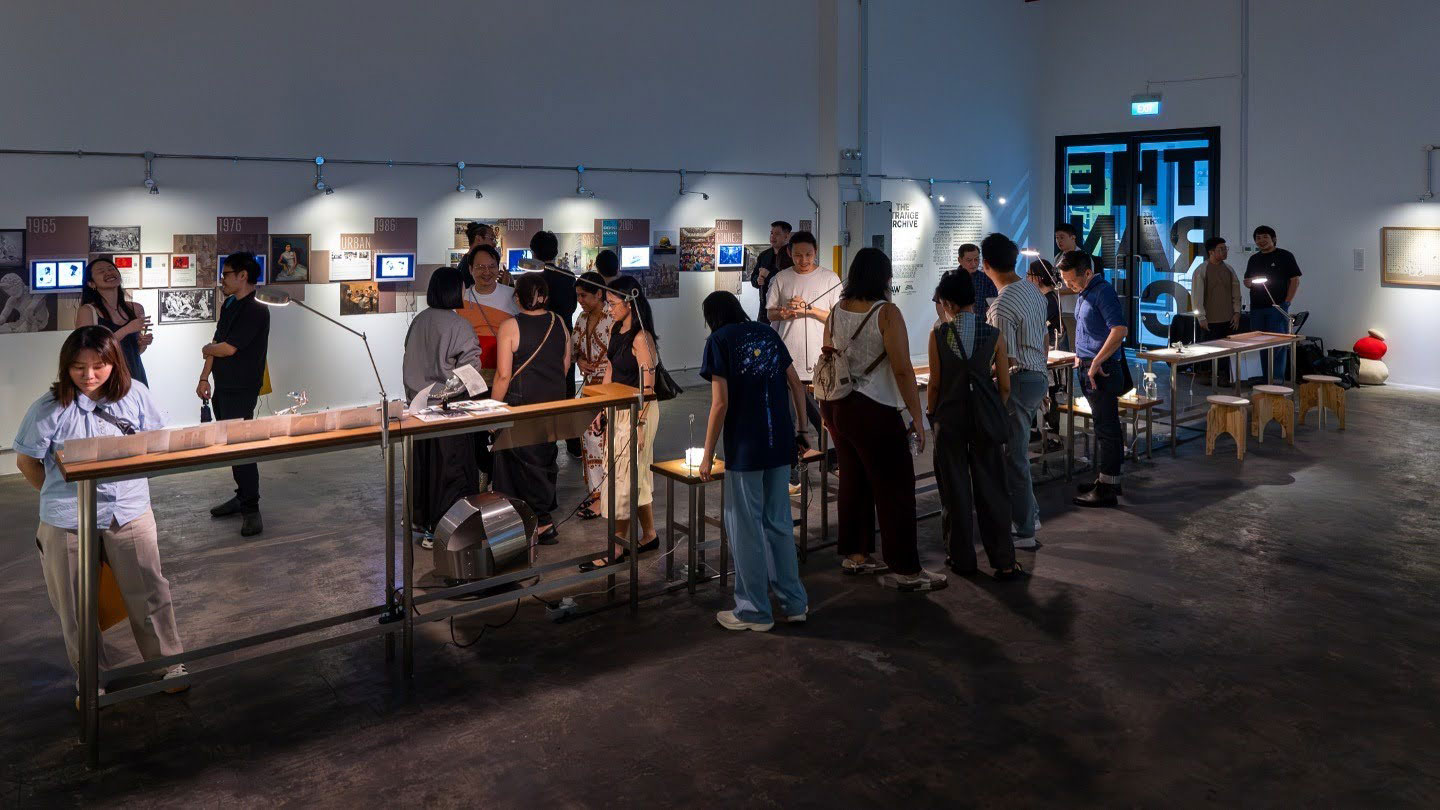
Of particular interest me are the social histories of contemporary art in Singapore and Southeast Asia, particularly artist-run initiatives, public art practices, archives, and independent cultural spaces from the late 1970s onwards. Through projects with The Substation or self-funded ideas like The Strange Archive, I explore how exhibitions can function simultaneously as research platforms, public encounters, and artistic productions. Alongside archival and oral history methodologies, I also work with digital humanities approaches such as mapping and visualisation to understand this circulation/ecology of art, artists, and institutions across space and time.
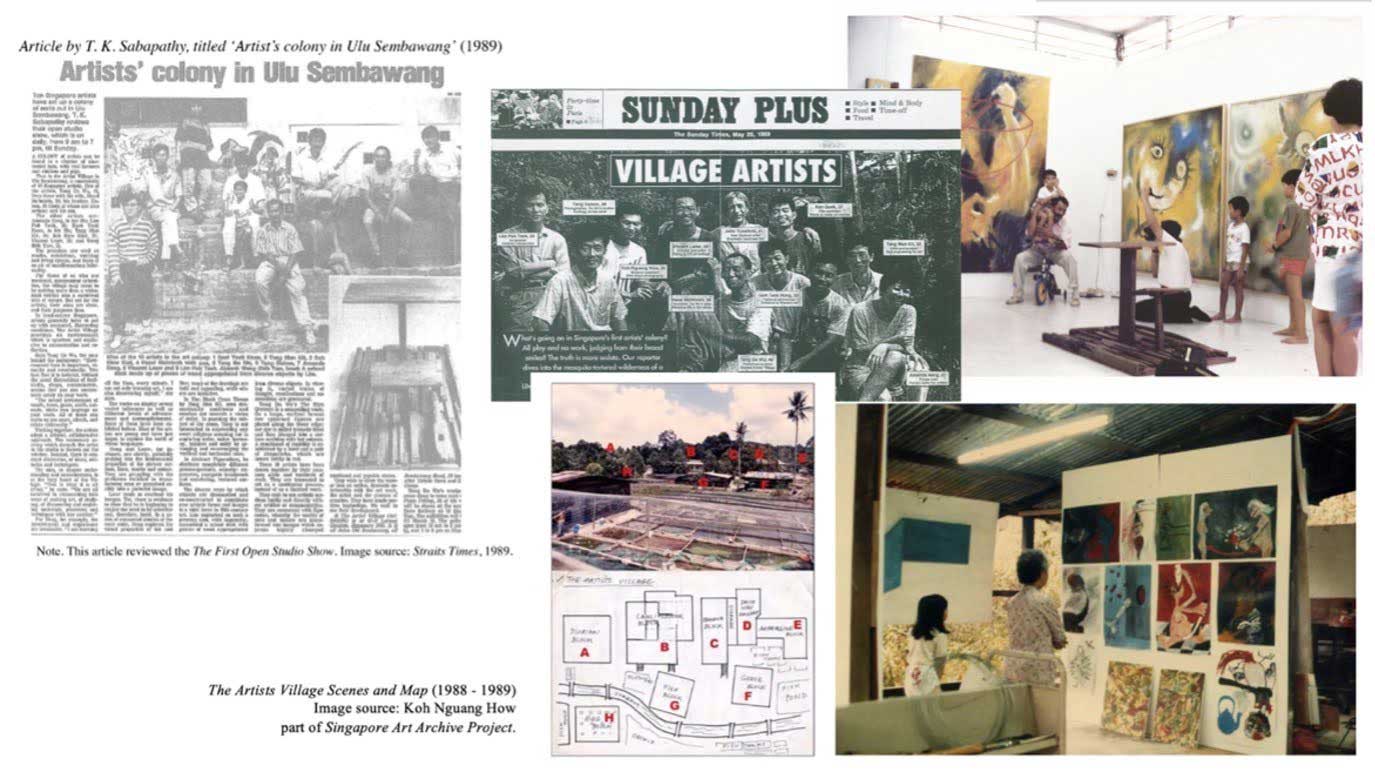
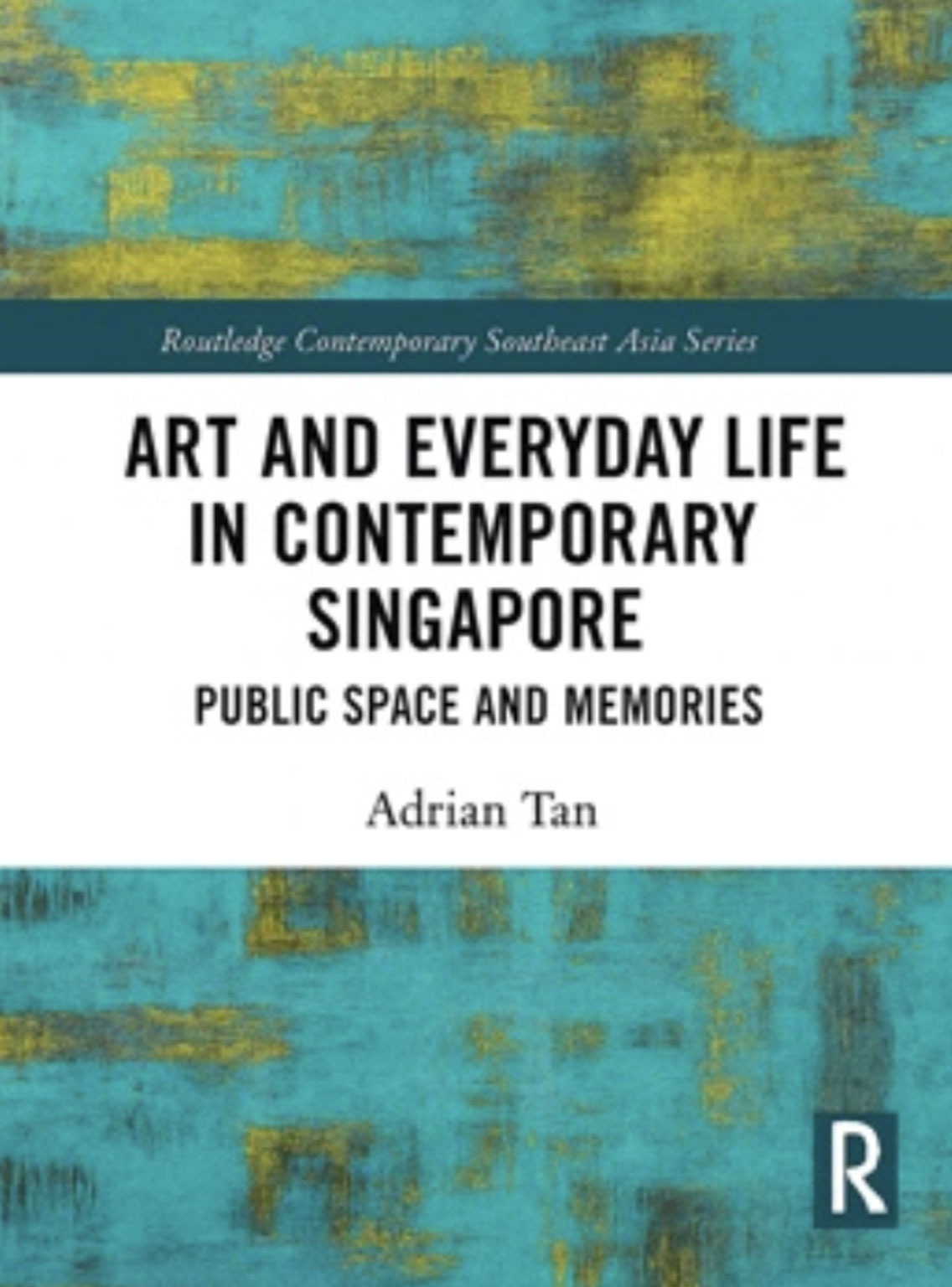
Art & Everyday Life in Contemporary Singapore: Public Space & Memories examines how The Artists Village and contemporary artist Tang Da Wu engaged public space, everyday life, and social memory through performance, artist-led initiatives, and curatorial practices, drawing extensively from archival materials within the Singapore Art Archive Project. The book traces alternative histories of contemporary art in Singapore from the 1980s onwards, foregrounding publicness, participation, and lived experience.
Rust: Echoes of Memory explored the intersections of memory, decay, and transformation through the works of Han Sai Por, Koh Nguang How, Lee Wen, Tang Da Wu, and Vincent Leow. Curated by Adrian Tan, the exhibition examined how performance, photography, sculpture, painting, and archival practices preserve fragile social, ecological, and artistic histories linked to The Artists Village and contemporary Singapore art from the 1980s onwards.
The essays in the accompanying publication further reflected on materiality, environmental memory, artistic labour, and the archive as a site of reflection, disappearance, and renewal.
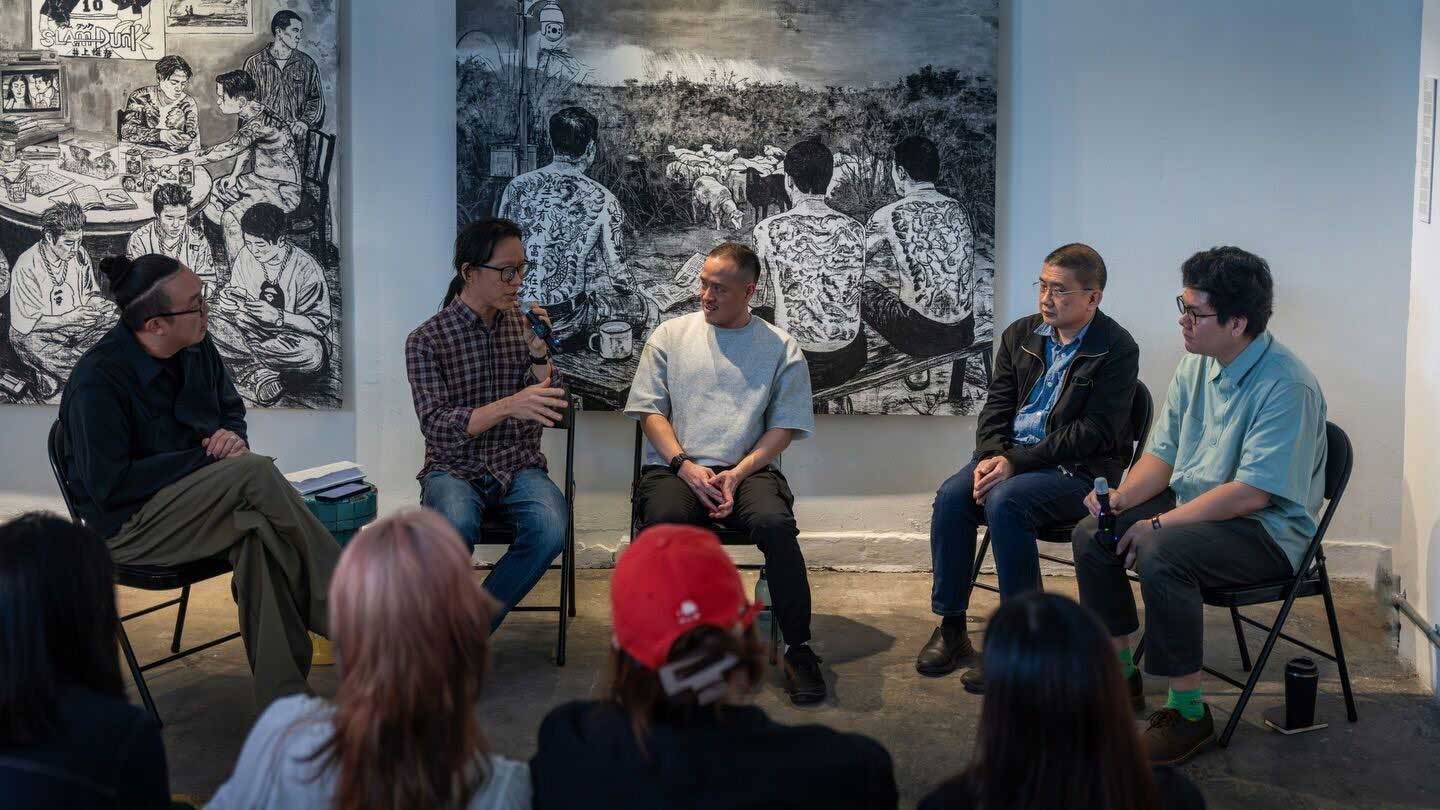
Questioning Museums: Art Institutions in Singapore brought together essays, interviews, and reflections examining the role of museums, curatorial practice, and art institutions in Singapore. Emerging from a symposium organised by NTU ADM and NTU CCA Singapore, the publication explored questions of publicness, institutional critique, cultural policy, and contemporary art in Southeast Asia.
The Strange Archive: Re-reading Singapore’s Archival History through Contemporary Curating
Arts and Design Practice Research Exchange (ADPRex) × APARN: Asia Pacific Artistic Research Network Conference
Nanyang Academy of Fine Arts, University of the Arts Singapore
30 July – 1 August 2026
Reframing Museum Studies in Singapore
Association of Southeast Asian Studies Conference
St John’s College, University of Cambridge, United Kingdom
15–17 September 2025
Decolonizing Narratives from the National Museum Art Gallery, Singapore
International Conference on Decolonizing Southeast Asia Studies
Chiang Mai University, Thailand
17–19 July 2025
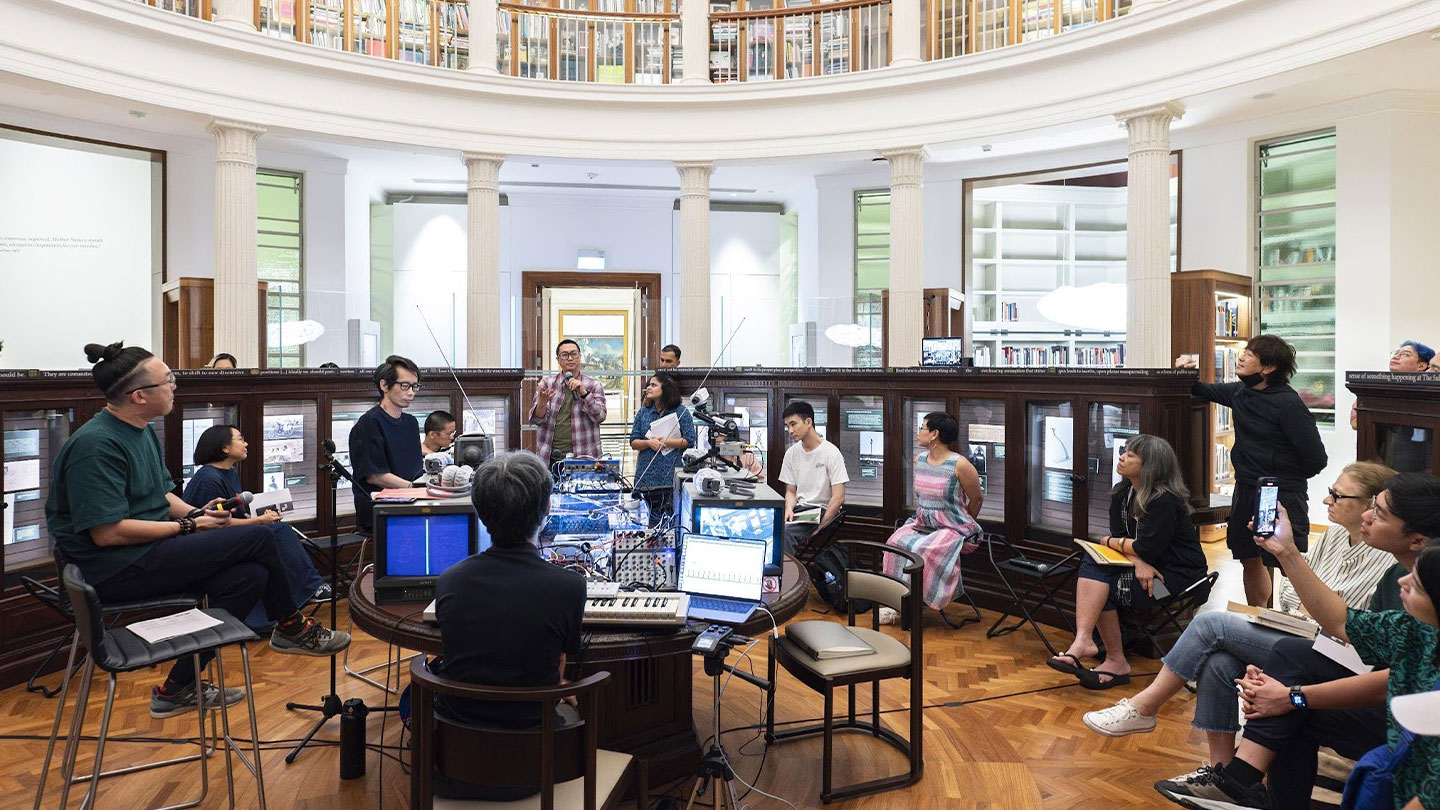
Curating Archives: OPEN END: Resonate, Re-Read and Re-Trace The Substation Archive
APARN: Asia Pacific Artistic Research Network Conference
Chulalongkorn University, Bangkok, Thailand
1–3 July 2025
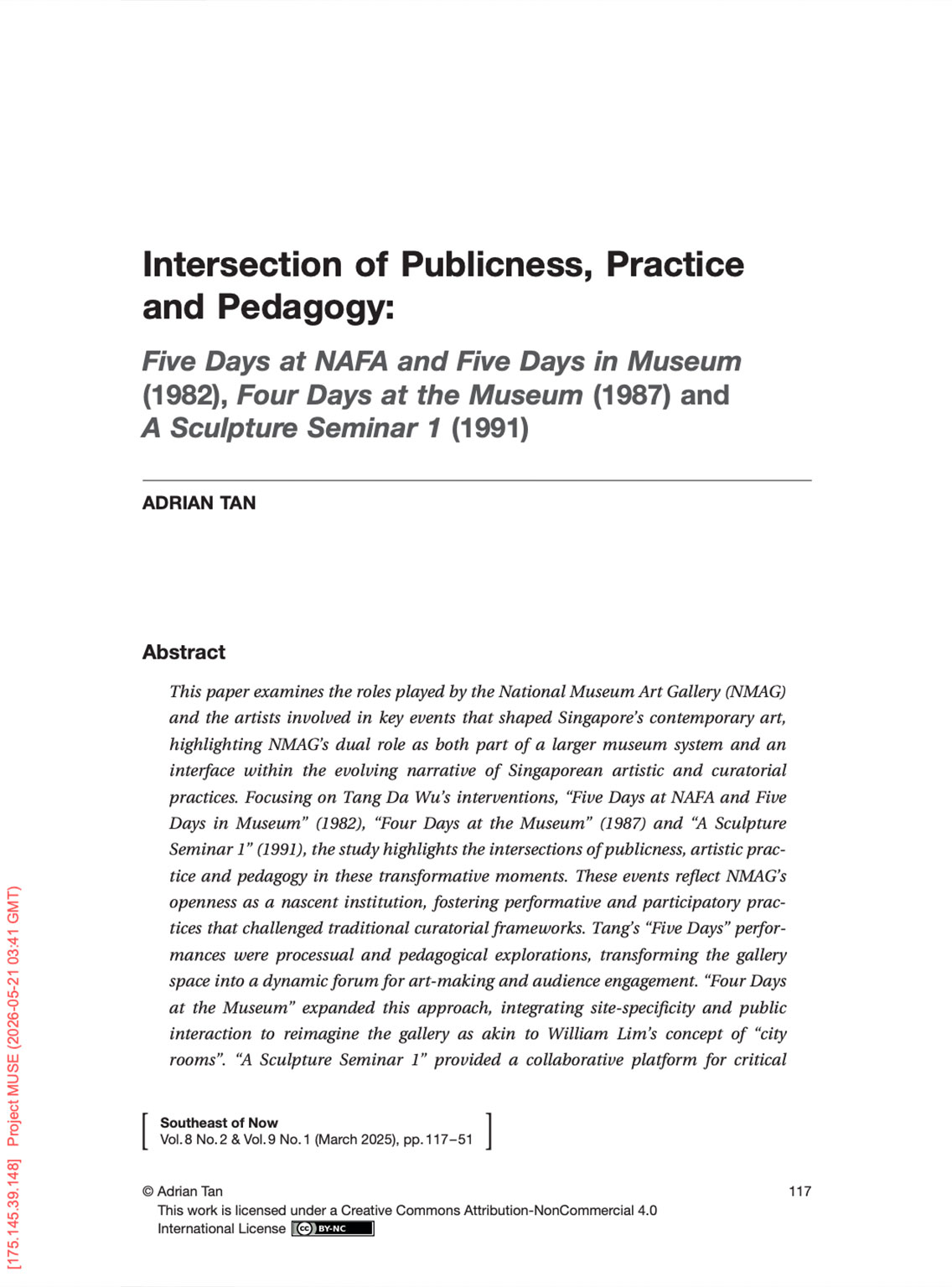
Making Art Public in Singapore: Revisiting Five Days at NAFA and Five Days in Museum (1982), Four Days at the
Museum (1987), and A Sculpture Seminar 1 (1991)
Imagining Asian Art in Transition: Symposium on Modern and Contemporary Asian Art 2024
Universiti Sains Malaysia, Penang
24–25 February 2024
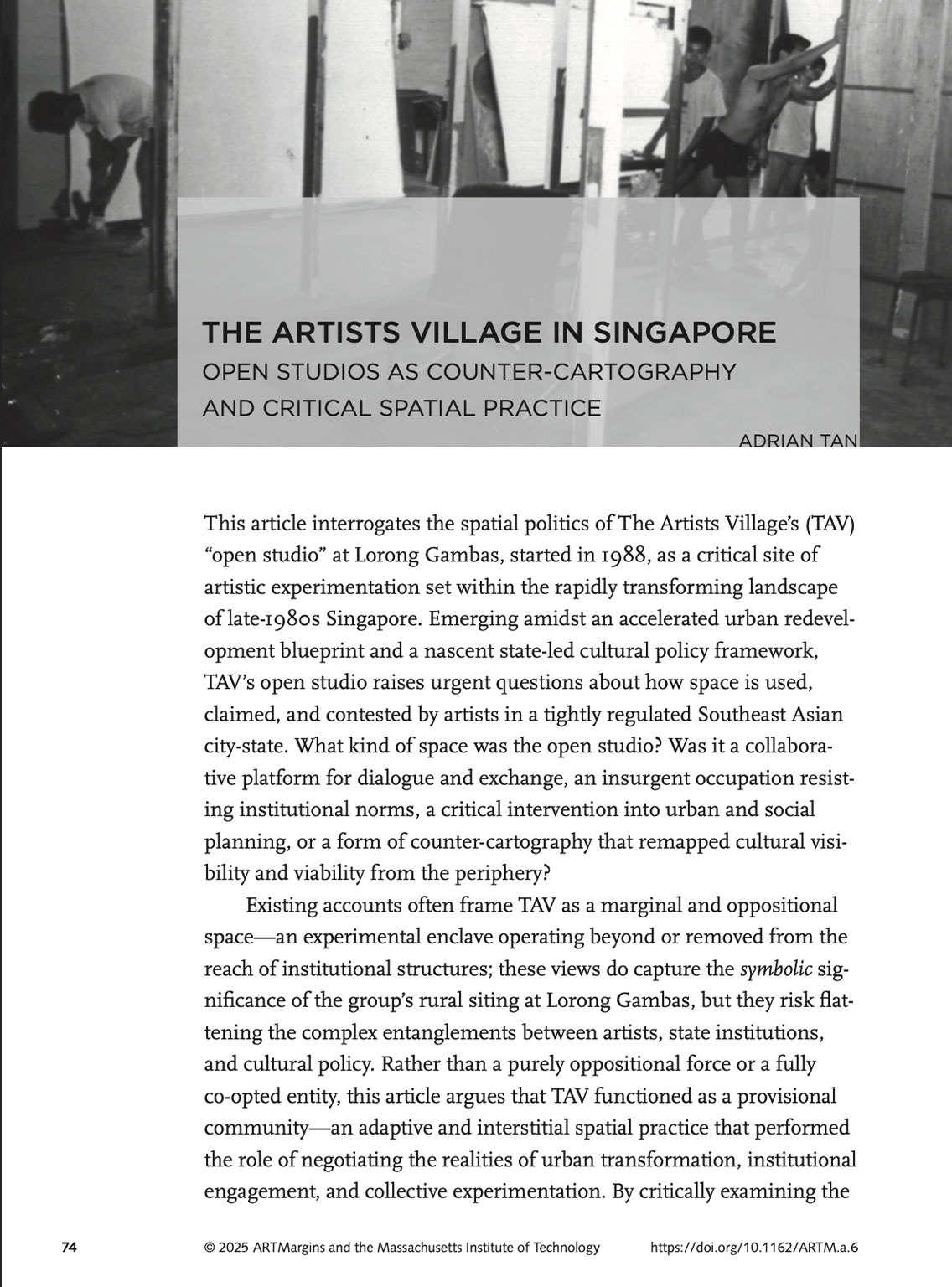
The Artists Village: An ‘Experimental Colony’ that ‘Performed’ the Museum
Artists’ Colonies in the World / The World in Artists’ Colonies
University of Melbourne, Australia
28–30 November 2022


Resonance as Archive: Clay, Rupture, and the Politics of Form in Contemporary Singapore Art
Permanence / Impermanence: Collecting and Archiving Contemporary Clay Practices
Ceramics Research Centre-UK (CREAM), University of Westminster, in partnership with the Victoria and Albert Museum,
London
24–26 June 2026
Why Performance Art?
Arts and Design Practice Research Exchange (ADPRex)
University of the Arts Singapore
1–2 August 2024
Life Boat
Understanding Displacement in Visual Art and Cultural History
University of Manchester, United Kingdom
24–25 October 2023
The Artists Village: An ‘Experimental Colony’ that ‘Performed’ the Museum
Artists’ Colonies in the World / The World in Artists’ Colonies
University of Melbourne, Australia
28–30 November 2022
“Open-Ends” as Making Art Public in Singapore
International Cultural Management Conference: Cultural Management in the Post-Pandemic World
Chinese University of Hong Kong
12–14 October 2023
From the Rural to the Urban: A Place for The Artists Village in the City (Panel Convenor, Speaker)
Art and Action: Contemporary Art and Discourse in Southeast Asia
LASALLE College of the Arts, Singapore
3–5 December 2018


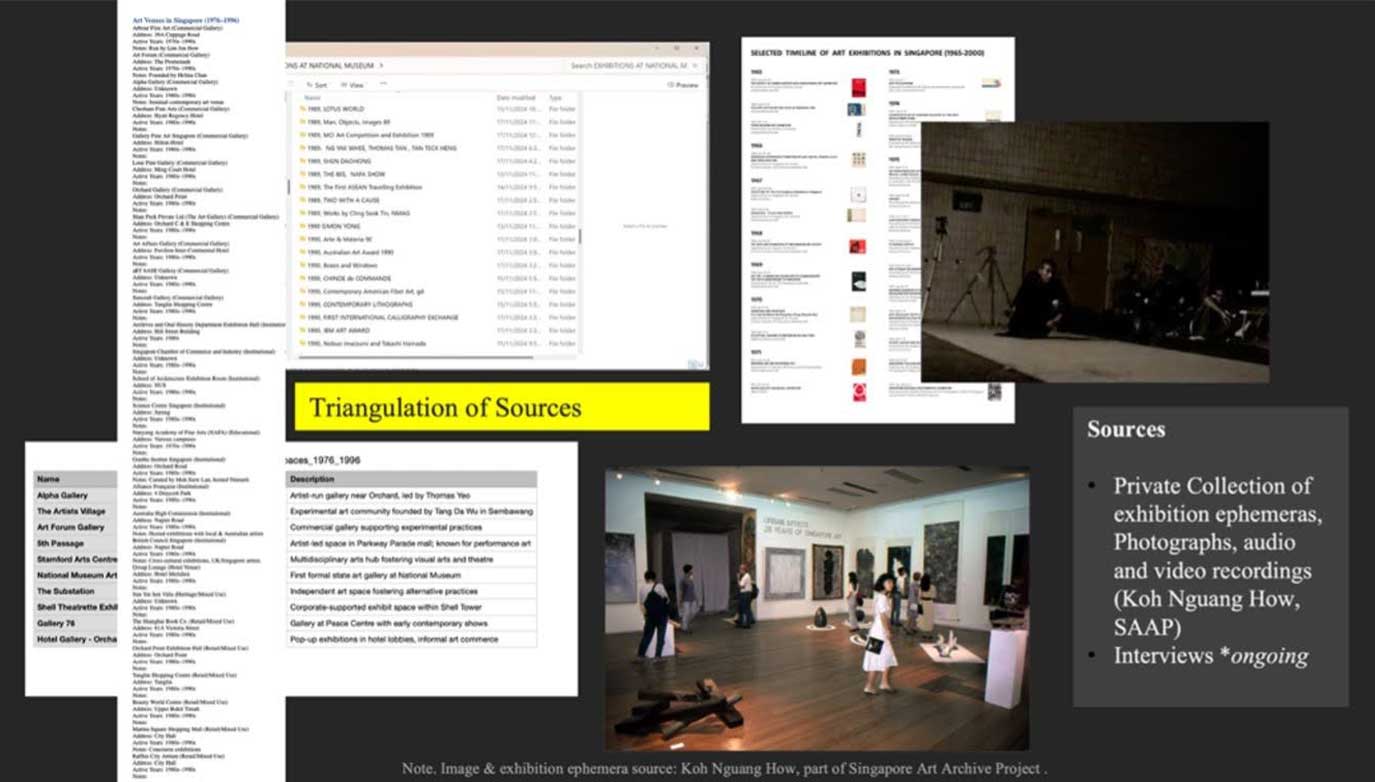
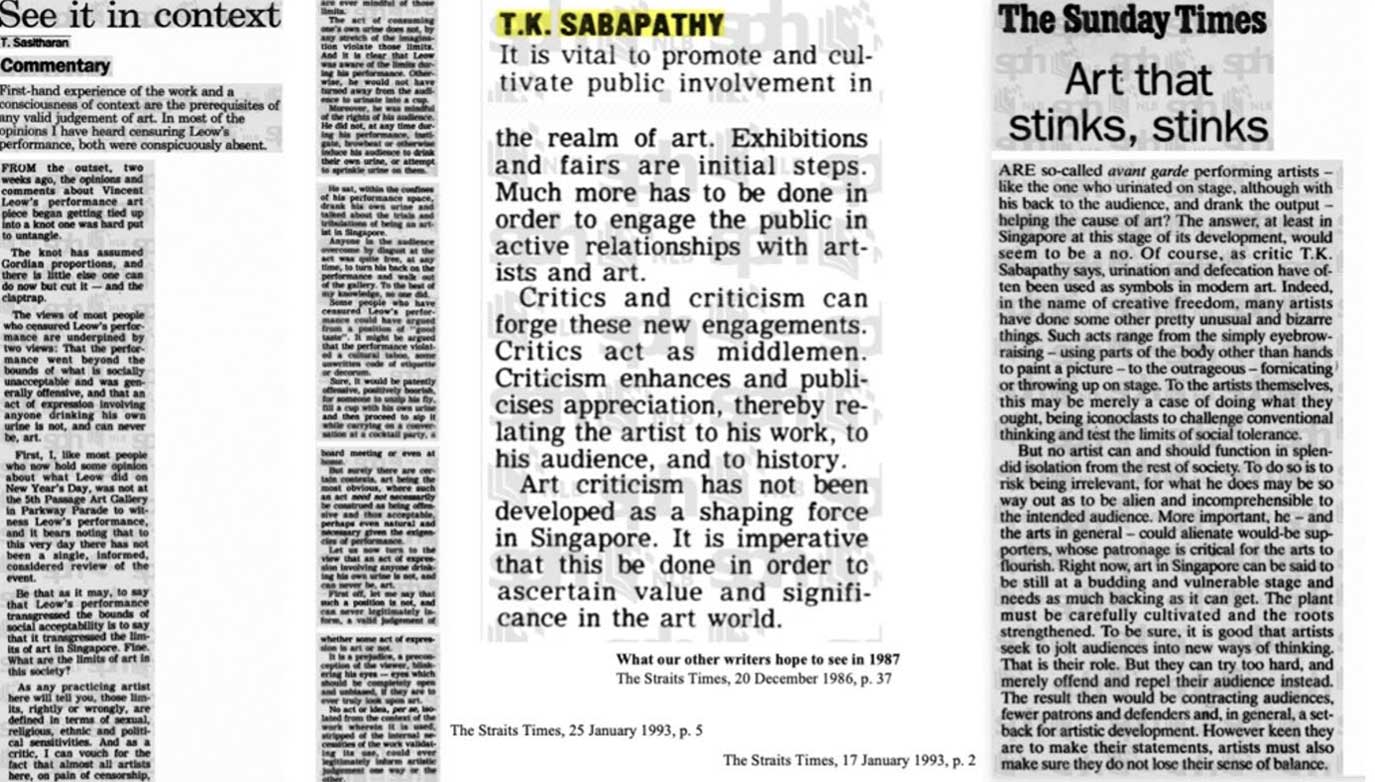
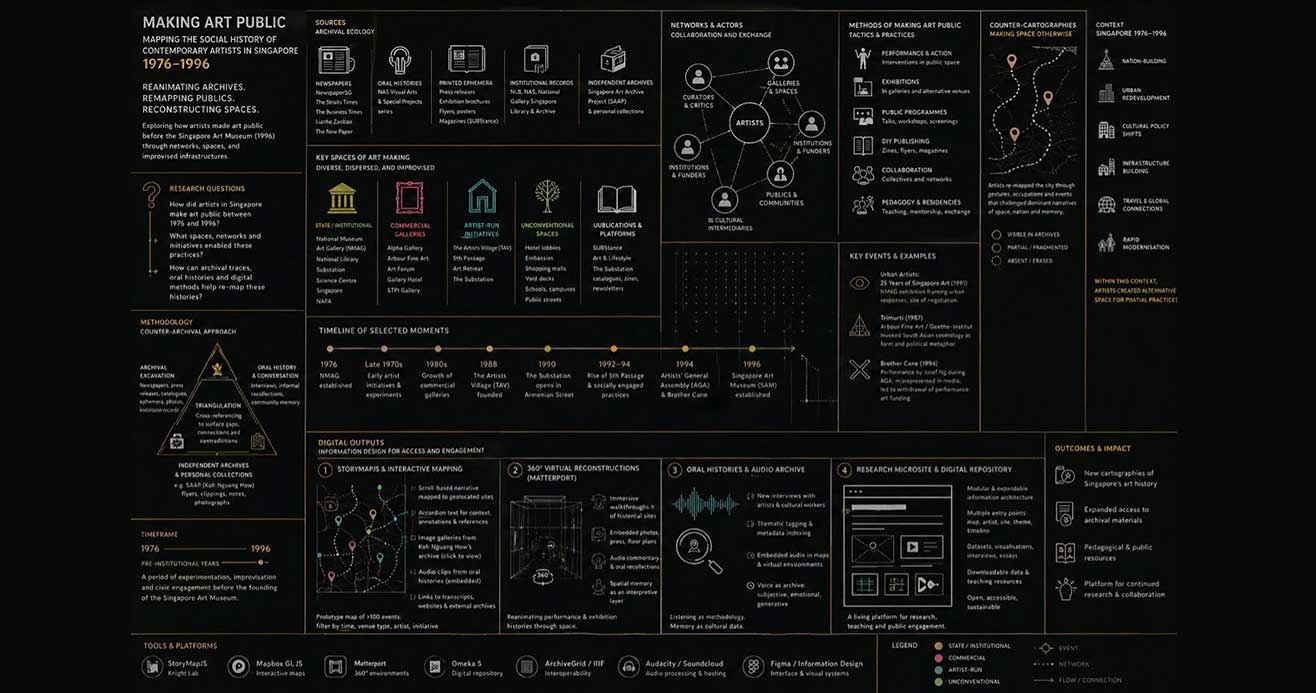
Making Art Public: Mapping the Social History of Contemporary Artists in Singapore (1976–1996) examines how artists made art public prior to the establishment of formal infrastructures such as the Singapore Art Museum and National Gallery Singapore. Conducted during my 2025 National Library Digital Fellowship, the ongoing research draws on archival materials, oral histories, and ephemera from the National Library Board (NLB), National Archives of Singapore (NAS), and independent collections.
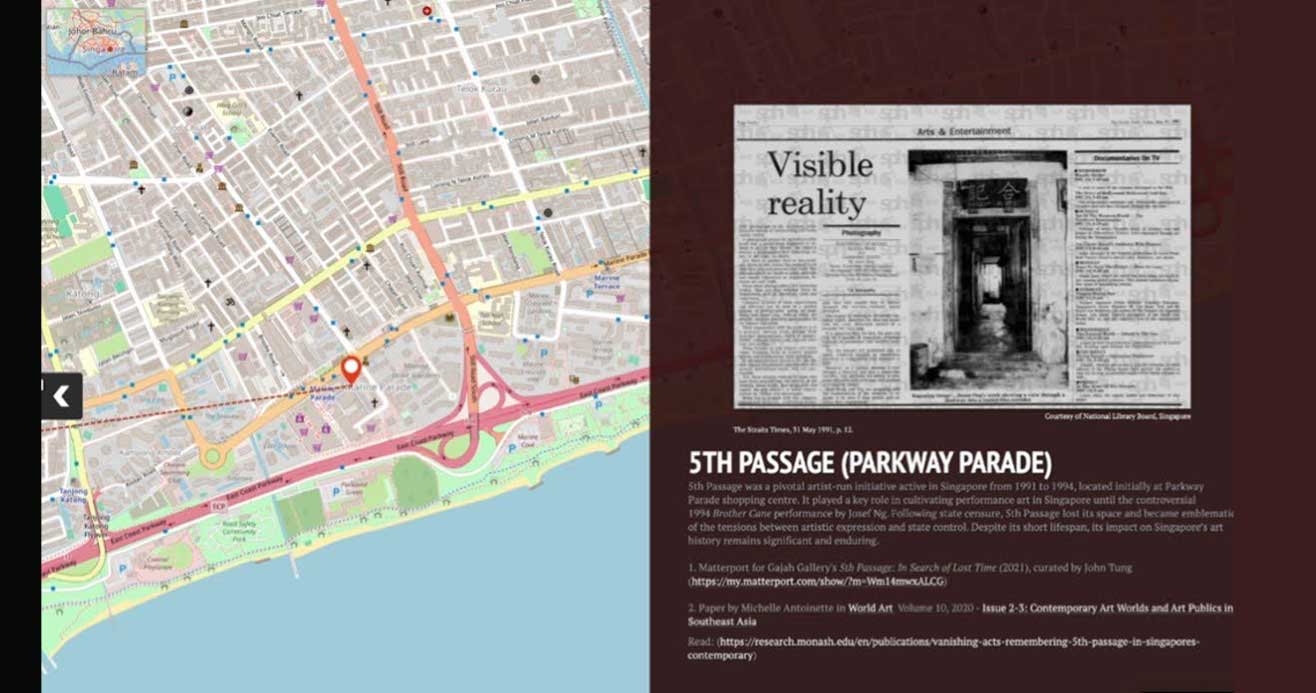
The project reconstructs how contemporary art from the 1970s to 1990s moved beyond museum galleries to activate malls, streets, rural sites, and hotel lobbies. Adopting a digital humanities framework informed by Johanna Drucker’s concept of graphesis, the project potentially draws on integrating mapping, indexing, and digital storytelling tools to visualise networks of artists, exhibitions, and cultural exchanges.
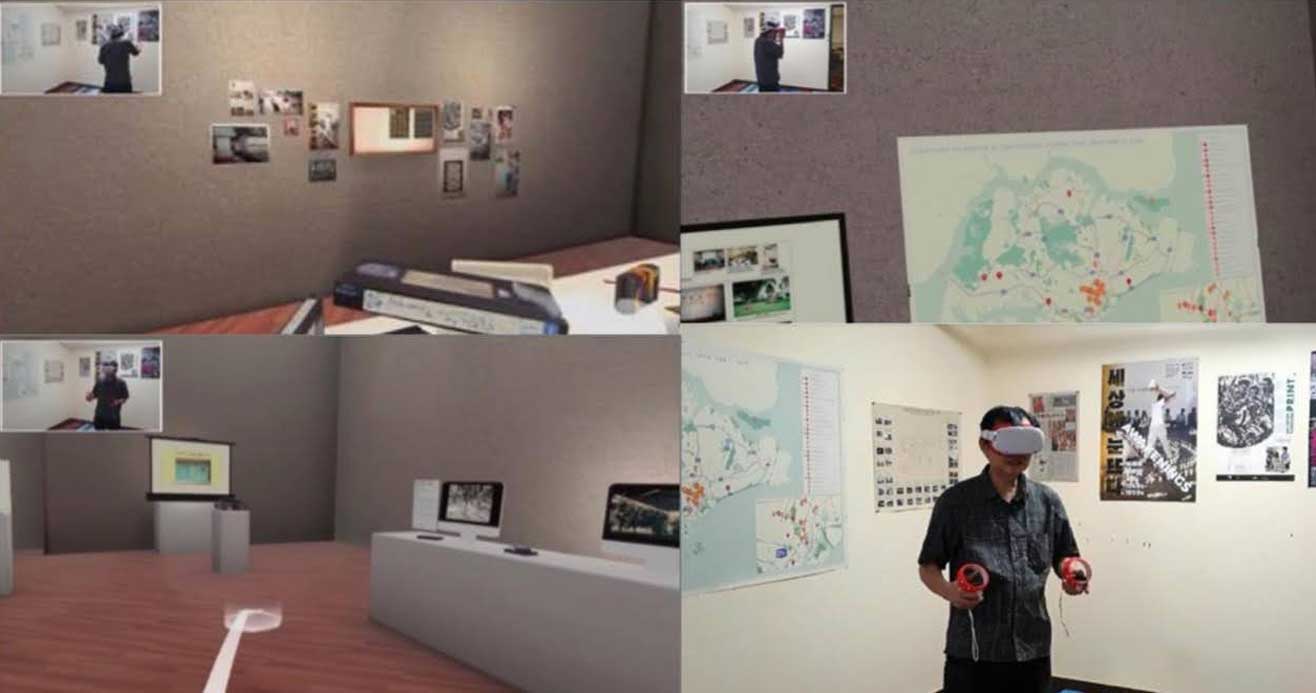
In dialogue with experimental approaches to information design, these visualisations treat the archive not simply as a repository of data but as a diagrammatic system through which relationships are structured, layered, and made legible. The resulting digital prototype reframes the archive as a living and participatory space, linking data and memory through non-linear and relational forms of navigation.
The findings reveal a dynamic history of contemporary art in Singapore shaped by collective agency, improvisation, and spatial negotiation. Making Art Public approaches the archive as a generative field where visualisation, interpretation, and historical inquiry converge to reanimate cultural narratives for the public.
In doing so, I am proposing a framework for recognising the embedded and organic trajectories of art, artists, and places that have come to shape Singapore’s cultural landscape. This work marks a beginning rather than a conclusion; it is evolving and ongoing.
What new connections might be drawn across archives, oral histories, and private ephemera? Which artists, spaces, or communities remain unrecorded? And how might emerging approaches in digital humanities and information design surface these untold histories?
Keywords: Digital Humanities, Archival Research, Contemporary Art, Singapore, Counter-Cartography, Oral Histories, Public Space, Information Design.



Curatorial Practice as Research: Archives, Publicness, and Exhibition-Making examines exhibitions as sites of knowledge production, artistic inquiry, and public engagement.
Positioned between curatorship, archival research, and visual arts pedagogy, the project explores how archives, oral histories, performance, and spatial interventions can be activated through exhibition-making to foreground memory, erasure, and alternative art histories in Singapore and Southeast Asia.
Through curatorial case studies such as OPEN END and The Strange Archive, the research investigates how exhibitions function simultaneously as research platforms, public encounters, and speculative environments that challenge fixed institutional narratives and expand contemporary understandings of art and publicness.


Digital Archives: Mapping of Art Spaces and Art Pedagogies explores how digital humanities methodologies such as mapping, timelines, and visualisation can be used to document and reinterpret contemporary art histories in Singapore and Southeast Asia.
Focusing on artist-run spaces, exhibition sites, archives, and pedagogical networks, the project examines how art circulates across institutional and independent contexts.
Through digital archives, oral histories, and spatial mapping, the research investigates how artistic communities, educational practices, and cultural infrastructures shape public engagement and collective memory, while questioning how histories are visualised, accessed, and made public through digital platforms.